Experience the tranquility of the Rusthof
- Hidden gems
- September 15, 2026
- 4 min read
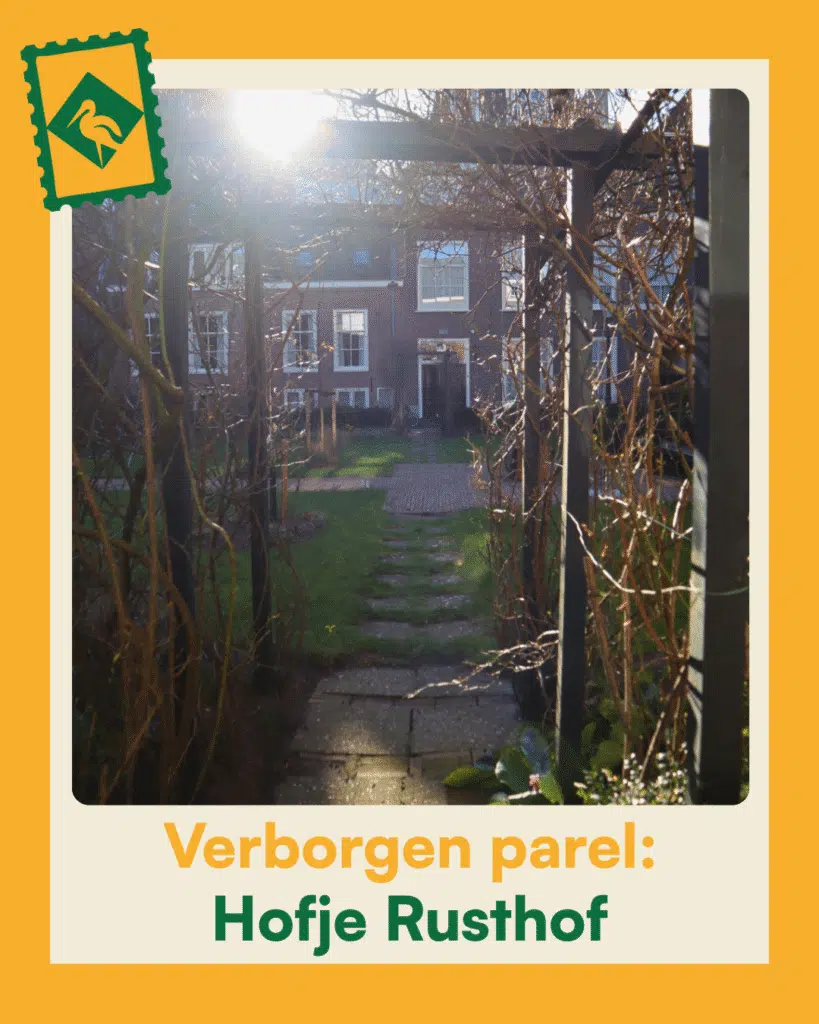
Some people come to the Rusthof courtyard very deliberately. Others stumble upon it during a walk. But they almost all experience the same thing: here, the hustle and bustle of the city fades away for a moment.
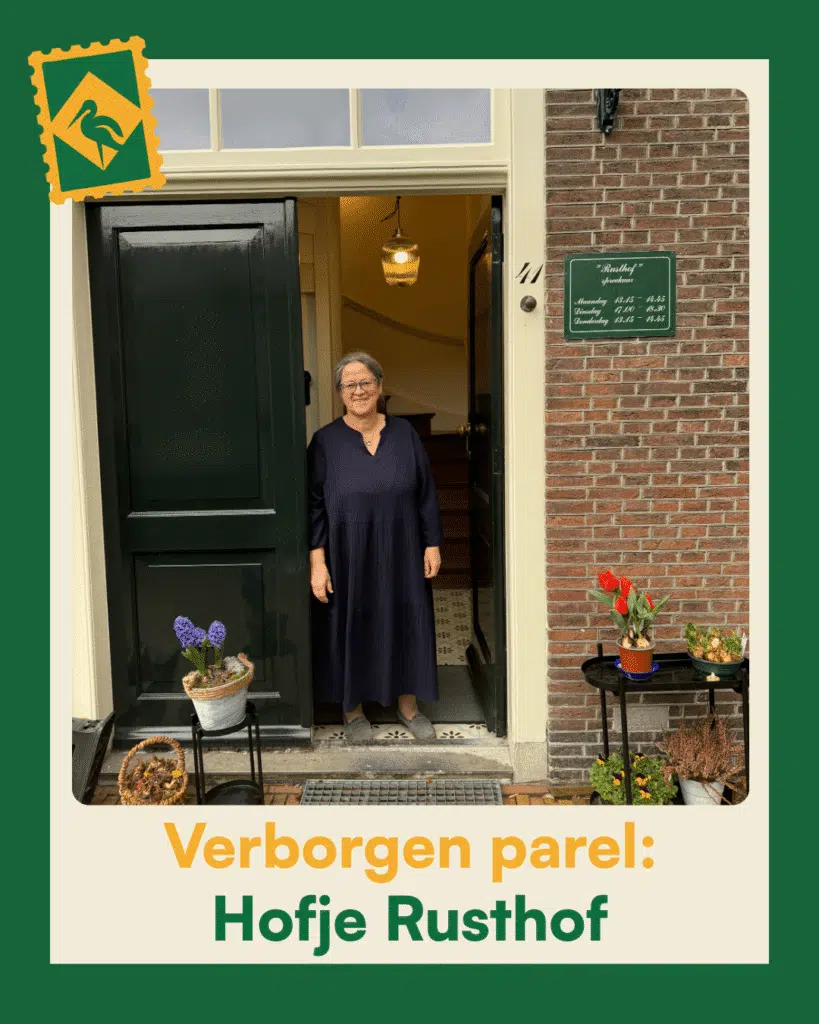
Mirjam van der Star, manager of the Rusthof since July 2025, notices this too. "Many people experience it as an oasis of calm," she says. "I still feel that way myself, walking in here and thinking: okay, wow."
At home in The Hague
Mirjam is originally from Monster, but her heart has been in The Hague for a long time. "I have lived in various places, but my preference is really for The Hague," she says. "I am very happy to be back."
That return unfolded differently than she expected. Mirjam really wanted to live in the almshouse, but unfortunately, her situation did not meet the requirements. Until a vacancy opened up for a caretaker: 'It was very special. A job became available that I really liked. And it came with a house.'
Between residents and the administration
What does Mirjam like best about her work? "I really love organizing, making sure things run smoothly. And I really enjoy the contact with people," she says with a laugh. Her role as a link between residents and the board also appeals to her. Mirjam experiences the atmosphere at the Rusthof as warm and helpful. "If there is anything, you send each other a message and there is always someone who takes care of it," she explains.
When Mirjam has to put the Rusthof into words, she doesn't have to think long. 'Rest, serene, peaceful. But also warm, sunny, and close-knit. It really is different from an ordinary street.' It is the people, above all, that make her proud: 'I am proud of the residents and the board. But also that it still lives on.'
A courtyard with a Hague heart
What makes this almshouse so typically The Hague? 'The board and the residents are almost all people from here. But also the location. When I tell people where I live, I say: "I live next to the King. His working palace is around the corner." They are certainly prominent places: the Council of State, the Lange Voorhout, the Binnenhof, the Kloosterkerk. That is all very Old The Hague.'
How it all began
For Mirjam, the strength of the Rusthof lies not only in the location but also in its history. The Rusthof was founded in 1841 by Elisabeth Groen van Prinsterer-van der Hoop (1807–1879). Elisabeth—or Betsy, as she was called—was the wife of Guillaume Groen van Prinsterer, a politician, lawyer, and historian. Together, they established the Rusthof to provide a place to live for older, single, and underprivileged women. 'I really like how it started. How Betsy looked through the gate, saw a dilapidated orchard, and how it all began back then.' According to Mirjam, the magic also lies in the way you experience the place. 'What strikes me is that many visitors rush in and out. Perhaps not everyone truly lets the atmosphere sink in. If you ask me what people are missing, it is definitely the atmosphere. It is precisely by pausing for a moment that you truly experience how special the Rusthof is.'